

Blackout, 1977
How culture only happens in the dark.

On July 13, 1977, lightning struck a Con Edison substation on the Hudson River and New York City went dark.
The timing couldn’t have been worse. 30,000 fires had been set in the preceding four years. Youth unemployment was at 60%. The Son of Sam was stalking pretty brunettes with a .44 Special revolver and a Satanic missive assigned to him by his neighbor’s talking dog. Hundreds of women and girls dyed their hair blonde. The city was bankrupt. When Mayor Beame attempted to negotiate a federal bailout and failed, The New York Daily News published what remains one of the most famous headlines in American history: “Ford to City: Drop Dead.” Every system designed to serve the population - the local government, the economy, the schools, the police - had either failed completely, been decayed by corruption, or fled altogether. And now the lights were off.
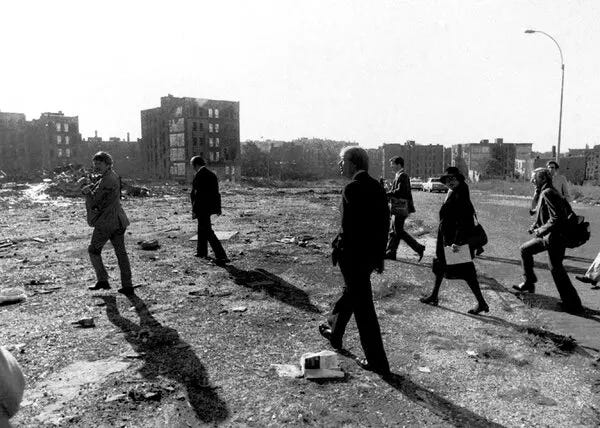
Within hours, glass shattered and sirens sounded. 1,616 shops were looted. Over 1,000 fires were set. 16,000 storefronts were damaged across 31 neighborhoods in all five boroughs. Four people were murdered under mysterious circumstances.
It was a catastrophe, and the Bronx got the worst of it. The South Bronx had already lost over 600,000 jobs by 1977. Up to 40% of the borough’s buildings were unusable, with many reduced to rubble. Chickens and dogs wandered the streets. Images from this time could be mistaken for Dresden in 1945 or Mosul in 2017. 176 people died of tuberculosis, which was cured in the mid-1940s.
The blackout is often remembered by New Yorkers as the Yankees’ infamous “The Bronx is Burning” season. It was their first World Series win in 20 years. The Bronx was, indeed, burning. And somewhere in the pitch-black haze of smoke and cinder, a kid named Curtis Fisher started a different kind of revolution.
Fisher (aka Grandmaster Caz) was DJing with his partner Luis Cedeno (aka Disco Wiz) in a park when the power cut. Panic set in as they thought they’d been responsible for blowing the circuit. But then the whole block went dark. Then the whole city. Caz walked a few blocks to The Sound Room, an electronics store where he’d bought his first setup, and lifted a Clubman 2 mixer. All over Brooklyn and the Bronx, kids were doing the same thing. They grabbed turntables, speakers, mixers, extension cords, and mics. They were deliberate, cobbling together sound systems from whatever they could wrap their arms around.
Before the blackout, you could count the hip hop crews in NYC on two hands, and in the rest of the world on none. After 1977, as Disco Wiz put it: “You had a DJ on every block.”
This was probably the most important cultural moment of the last half century. A global, multi-billion-dollar industry that reshaped music, business, fashion, language, advertising, and the entire concept of “cool” was catalyzed by a power failure and a crime spree. No A&R man approved it. No development executive greenlit it. No content strategy informed it. No police officer cared to stop it. No institution had the authority to say “no.” Because no one could see anything at all.
mētis
In 1998, the political scientist James C. Scott published Seeing Like a State. Scott’s argument is that institutions fail when they try to make complex systems “legible.” One might assume that taking a Byzantine organic structure and making it feel more readable, measurable, and manageable is good. But one would be wrong. Scott roots this in his key concept, something called mētis - a Greek word for the practical, local, informal knowledge that can't be captured in a framework or a policy statement. Your nonna’s gravy recipe or the mechanic who can hear what's wrong with your engine before he even opens the hood. Every time an institution imposes rational order on a system that operates through mētis, it destroys the thing that made the system work in the first place. Scott’s examples are illuminating. The Prussians invented “scientific forestry” and killed all their forests. The Soviets used a Marxist collectivistic framework to “rationalize” agriculture and produced nothing but a famine that killed between 7-10 million Ukrainians. Brasília was designed to be the perfectly-planned modern city. Yet once it was complete, nobody wanted to live in it.
Hip hop is pure mētis. Or at least it was. Oral, local, improvised, and illegible to every institution that existed in 1977. There was no business model. There was no audience research. There was not even a genre, as the term didn’t exist yet (at the time common idioms included “disco-rap” and “old school”). Trailblazers like Caz and Wiz and Kool Herc and Afrika Bambaataa were operating below the threshold of institutional visibility, which is the only reason they were operating at all.
Scott’s insight isn’t that institutions are stupid or malicious. It’s that legibility itself, the act of making something measurable and manageable, is incompatible with the thing that makes a system feel organic and alive. The forest looks like chaos to the forester, but it makes perfect sense to a fox or an indigenous tribe. The neighborhood looks like an inefficiency to the urban planner, but its idiosyncrasies are what gives it character. The mixtape looks like piracy to the label, but it's the only reason anyone heard the music in the first place. Scott's primary concern was the destruction of these kinds of systems. But destruction invites a second act.
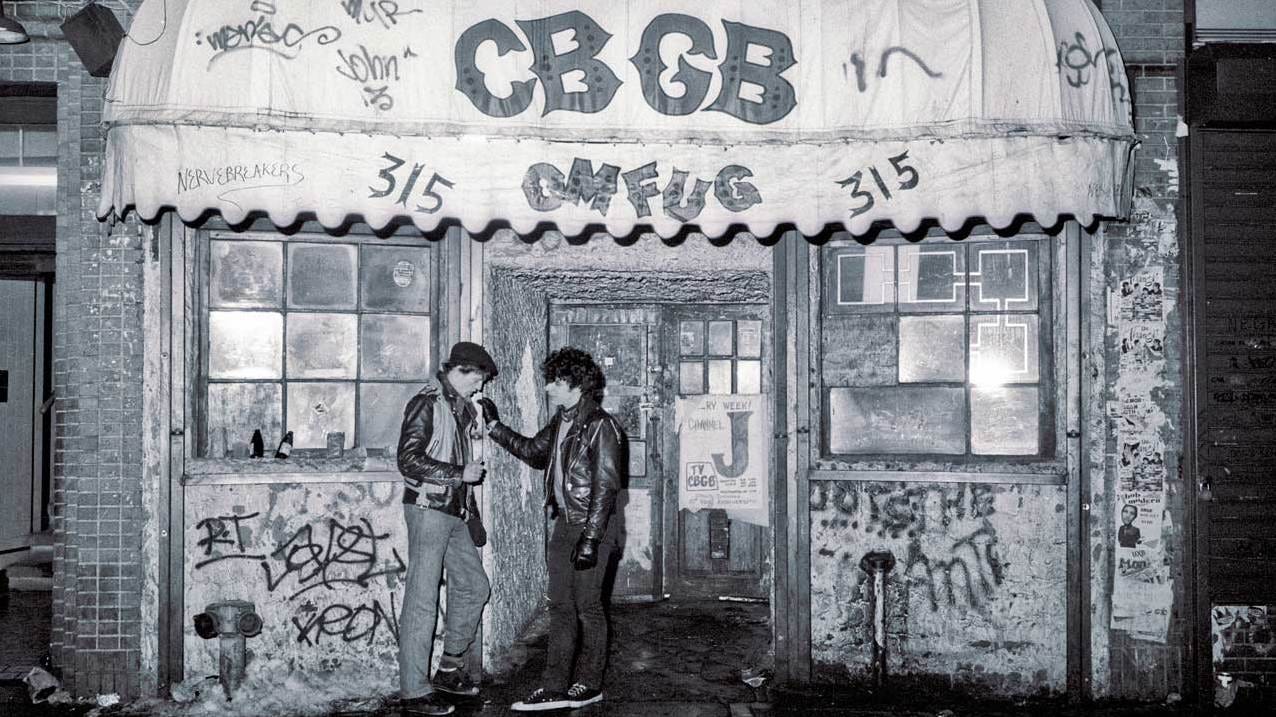
mētis as culture doesn’t just survive disaster. It requires it. The world’s coolest neighborhoods almost always used to be the seediest. And it wasn’t just hip-hop that required catastrophe as catalyst. Punk came out of the same wreckage, only a few years earlier. The Bowery was a wasteland. CBGB existed only because nobody else wanted the lease. The Ramones were playing to empty rooms in a city that was too broke and too scared to notice. The pattern is, remarkably, almost always the same. The institution collapses, or retreats, or simply looks the other way. The people left abandoned in this void, the ones with no system to rely on and no authority to appeal to, build something within it from instinct. Then, we swoop back in and try to monetize it.
This is how “culture” is actually born. And it explains why brands and politicians alike have such a hard time engineering it for their own use. You can’t manufacture a blackout. You can’t schedule a collapse. But you can, apparently, deregulate one.
Weird Cartoons
President Reagan was known for his love of God, jelly beans, and deregulation. Energy, business, transportation, finance, environmental standards, labor. In 1984, his FCC brought the free market to something a tad more niche: children’s television. The old rules included limits on advertising, separation of programming from commercials, and requirements for educational content. These were gutted. What followed was the most commercially captured era of children’s media in American history. By 1985, cartoons featuring licensed characters had increased 300%. He-Man, Transformers, GI Joe, Care Bears, My Little Pony. Every show was essentially now a 22-minute toy commercial. The top ten best-selling toys all had their own series, and kids loved them. Children’s programming had achieved total legibility. Every show existed to sell a product. Every output was measurable against a sales target. The system was working perfectly. But the culture was dead.
Then came Vanessa Coffey.
Coffey had spent years at Murakami-Wolf-Swenson making exactly these kinds of toy-ads-as-content, notably Teenage Mutant Ninja Turtles (which, don’t get me wrong, still rocks). One day she got sick of it all and called Nickelodeon, which barely had an animation department at the time. They gave her a mandate to develop original animated programming and almost no infrastructure to do it with. No development process. No brand safety apparatus. No talent pipeline. Coffey was essentially a one-woman green light committee operating on instinct. And her instinct was killer.
Jim Jinkins walked in with a drawing of Doug Funny and a book proposal. Approved. John Kricfalusi pitched a variety series called Your Gang. Coffey didn’t want any of it. But she liked two of the side characters — a psychotic chihuahua and a dimwitted cat. Arlene Klasky proposed a show based around what children actually thought about all day, with characters designed after her creative partner’s own kids. Doug, Ren & Stimpy, and Rugrats all premiered on August 11, 1991. The Nicktoons block had one of the highest-rated debuts in cable history.
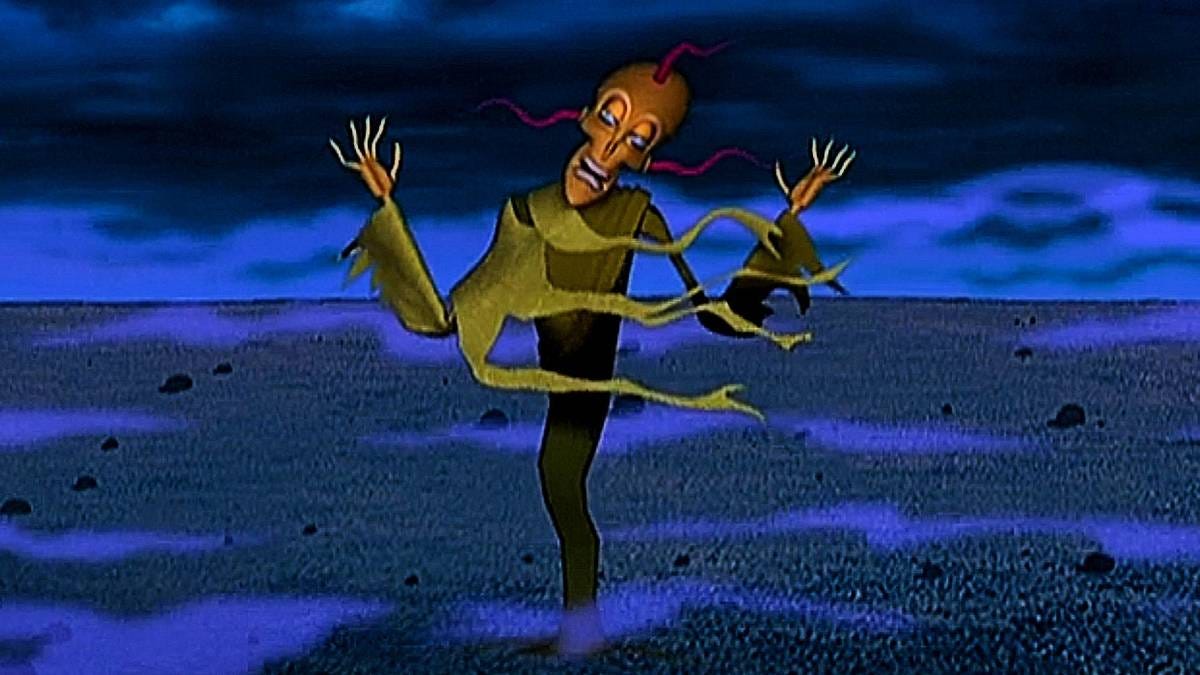
These shows were weird, and difficult to spin off into merchandisable IP. But they pale in comparison to what followed. Coffey had ushered in the golden age of increasingly bizarre children’s television. Rocko’s Modern Life. Aaahh!!! Real Monsters. Courage the Cowardly Dog. Ed, Edd n Eddy. Invader Zim. Dexter’s Laboratory. Sheep in the Big City. The Powerpuff Girls. Johnny Bravo. Between Nickelodeon and Cartoon Network (which Turner launched in 1992 as a dumping ground for Hanna-Barbera reruns before it accidentally became a creative powerhouse), an entire generation of children was exposed to programming that was artistic, surreal and existentially bleak. These cartoons were overwhelmingly nihilistic, often inappropriately sexual, and completely unconcerned with whether any adult approved of them. Ren & Stimpy featured so much psychotic violence and body horror that the creator was eventually fired by Nickelodeon’s Standards and Practices department for pushing too far. But by then the show had already reshaped what children’s animation, and culture, could look like.
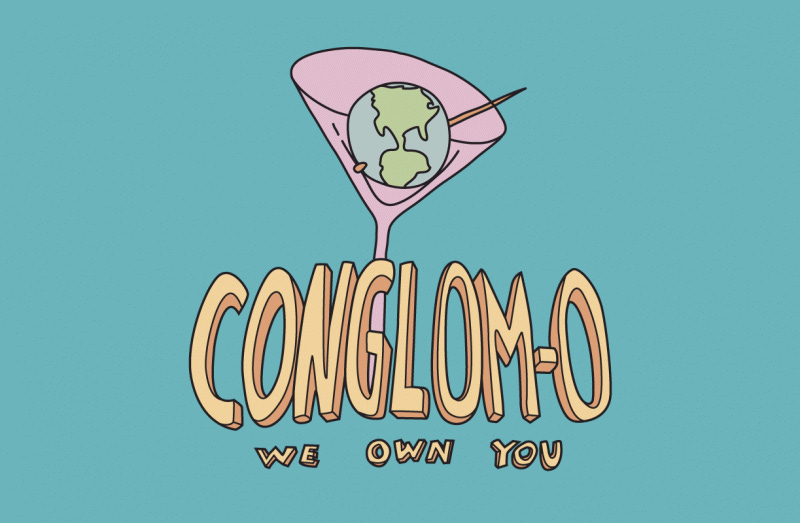
They weren’t all strange for strangeness’ sake, however. Hey Arnold! was starkly realistic, addressing issues like substance abuse, depression, suicide, social inequality, and the thanklessness of altruism. Courage the Cowardly Dog was a horror show about an elderly couple deteriorating in rural isolation that directly addressed mental health through not-so-subtly monstrous metaphors. Rocko’s Modern Life had a penchant for critiquing capitalism. The show’s world was run by “Conglom-O,” a corporation whose tagline was “WE OWN YOU”.
These shows were made for an audience that was alone in the room. No co-viewing data. No parental engagement metrics. No Common Sense Media ratings. No phone to distract them. The creators knew that the kids watching after school were unsupervised, and they made art that took advantage of that. Programs that treated children as capable of handling darkness, ambiguity, and discomfort. Shows that prepared them for the world, rather than sanitized it. The result was a generation with an unusually high tolerance for the strange. Millennials are particularly weird, and oddly resilient, because we were the last generation raised inside of a supervision failure.
This window opened because the old legibility regime (toy commercials) had collapsed and the new one (content strategy, licensing pipelines, sensitivity reads) hadn’t formed yet. Another kind of blackout. And in the dark, a handful of creators with mētis made the best children’s animation in American history. When the institutions caught up, when Nickelodeon became a real corporation with real development processes and real brand safety infrastructure, the golden age ended. Not because the talent disappeared. But because they were now increasingly being watched.
Blackout Zones
There are still places where the lights are off right now.
Independent print is back. Not as Kinfolk-adjacent hipster nostalgia, but as good business. Risograph-printed, staple-bound, hyperlocal publications are proliferating. Print fairs have multiplied from Brooklyn to Atlanta to Boise. DIY zine tutorials have millions of views on YouTube. Print readership is actually rising among younger demographics for the first time in decades.

Field & Stream, founded 1895, once had over a million print subscribers. A series of corporate owners gutted it and killed print in 2021. Then two country musicians bought it in 2024 and relaunched. Garden & Gun never collapsed at all. Southern lifestyle, hunting, food, and culture. Thriving for years by serving a specific audience that mass media abandoned. Niche favorites like Apartamento, the Drift and HommeGirls are all widely-read and reportedly profitable. Mushroom People (exactly what it sounds like) is a huge seller, as is its sister publication Catnip (yeah, it’s about cats). Texas Monthly punches above its weight as “The National Magazine of Texas.” The names alone tell you something about what grows when creators are left unsupervised.
This is far from the only blackout zone. In Manila, a regional EDM genre called budots went international through a TikTok challenge that no brand nor strategist programmed. In Lagos and Accra, designers are building influential fashion brands through WhatsApp, not Instagram. In Louisville and Tucson and Detroit, the hyper-legibility of the live music industry (dynamic pricing, algorithmic booking, corporate venues) has pushed DIY shows into living rooms and warehouses and unlicensed basements. As every trend reporter opines about the “monoculture,” there’s actually more interesting stuff going on now than there was 10 years ago. It’s just, largely, in the dark.
Chaos emerges from lack of supervision. But so does culture. It’s time to turn off the lights.